Misconception 1: The Bigger the Ship, the BetterMYTH 1
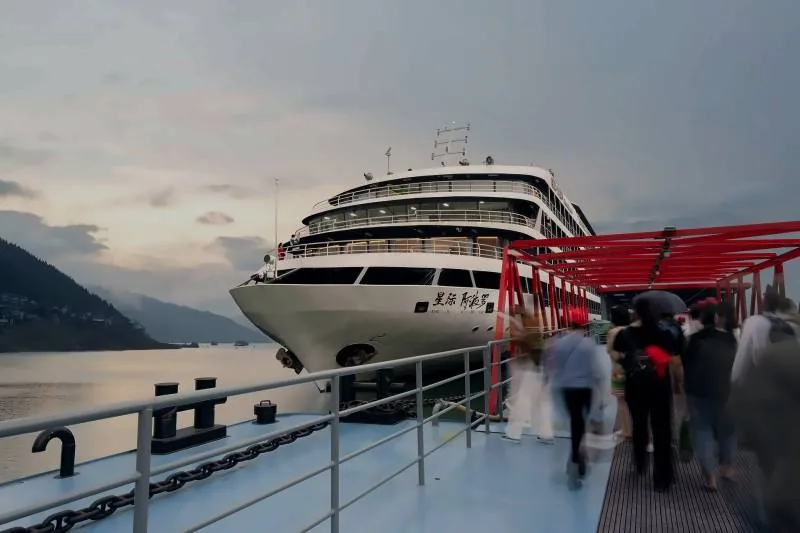
Truth: Not necessarily. Tonnage and quality are not fully linked. The classic example is the Yangzi Explorer — at its 2008 launch it was only a little over 5,800 tons, yet it is widely recognized as the finest cruise on the Yangtze: just 148 guests fully loaded, a crew-to-guest ratio approaching 1:1, service refinement far beyond many larger ships, and it passes the ship lift on its own hull and runs the special Shennongjia route.
The advantages of big ships are rich public facilities and a stable ride; but small, refined ships actually outperform in per-guest service resources and quietness. Choose a ship by overall brand reputation, service ratios, the state of the facilities and the route arrangement — not by the tonnage figure alone.
Misconception 2: The Higher the Deck, the BetterMYTH 2
Truth: Decks 3-4 usually offer the best value. Premium cruises mostly have 5-7 decks: deck 2 is busy and often holds the restaurant, so it is noisier; decks 5-6 mostly hold premium room types and concentrated entertainment facilities, which are also noisy; decks 3-4 are quiet and balanced, with the friendliest fares — presidential suites are usually on the lower decks, in fact.
Bookings default to the base deck; staying higher requires a paid "deck upgrade". According to traveler feedback, moving up one or two decks makes little difference, while going too high puts you near the entertainment deck and it gets noisier. For value seekers, it is more worthwhile to save the deck-upgrade fee and put it toward a better room type.
Misconception 3: The Cheaper, the Better the DealMYTH 3
Truth: There are no "bargain-hunting miracles" on cruises. A more expensive cruise is generally better than a cheaper one in facilities, dining, and service; how much better depends on how much more you pay, and a better ship will not cost less (except during special promotions). Tickets on standard (non-premium) cruises usually exclude meals, and onboard dining is relatively expensive with limited options; premium cruises include meals, sights, and entertainment — a completely different overall experience.
When comparing prices, factor in "what is included": lodging standard, dining format, included sights, room size. Comparing prices without the inclusions easily leads to misjudgment.

Misconception 4: Booking Early Gets You a Good RoomMYTH 4
Truth: Booking early ≠ choosing a room. Booking early has no direct bearing on the specific cabin you finally stay in — it only increases the likelihood of securing a booking. Unlike hotels, cruises do not allow you to reserve a specific room; you book by room type, and specific cabins are assigned by the cruise line. After boarding, if you wish to move to a higher deck and cabins are available, you must pay the deck-upgrade difference yourself.
The opposite mistake is buying a ticket only at the pier: popular sailings are often sold out, and even when tickets remain, scalpers may resell them for hundreds or even thousands of yuan above the normal price. Booking in advance through legitimate channels is both the money-saving and the safe approach.
Misconception 5: The "Best Value for Money" ClaimMYTH 5
Truth: Cruises have no real "value-for-money" concept. The market is full of claims that "such-and-such ship is the best value", but in practice cruise prices and quality correspond almost one to one — pricier ships are usually better in facilities, dining, and service, and good ships are never cheaper. So-called "value for money" is often just marketing talk.
The right approach is: first read each ship's specifications (tonnage, decks, room size, facility list), narrow the field by budget, then decide based on route direction and travel companions (whether seniors or children are with you). You can start with the 8-level budget quick-reference table on the homepage, and also consider well-reviewed newer ships such as the Century Victory.
Misconception 6: You Can Pay on BoardMYTH 6
Truth: Full payment is required in advance. No matter which travel agency or booking channel you use, the full amount must be paid in advance to guarantee boarding — cruises depart on schedule, and the cruise line will not hold a cabin without payment. This is standard industry practice for cruise bookings.
The proper process: after ordering, pay a deposit first to lock in the cabin; once secured, sign the travel contract and pay the balance in full, at which point the order takes effect. If the booking fails, all payments are refunded in full via the original payment method. Before you pay, all cost details are confirmed with you in writing.
Any other ship-selection advice?
Established cruise brands offer more assurance; do not judge a ship solely by how new or large it is; do your research and compare — no matter which legitimate channel you book through, the service on board is the same. For more questions, see the FAQ page.
Contact & Booking
Unsure which ship or room type to choose? Feel free to contact a Three Gorges Cruise Center consultant at any time.
You can also click "Online Consultation" at the bottom of the page to chat with a consultant in real time.